
What Can Work-Zone Setup Reveal About NY Truck Liability?
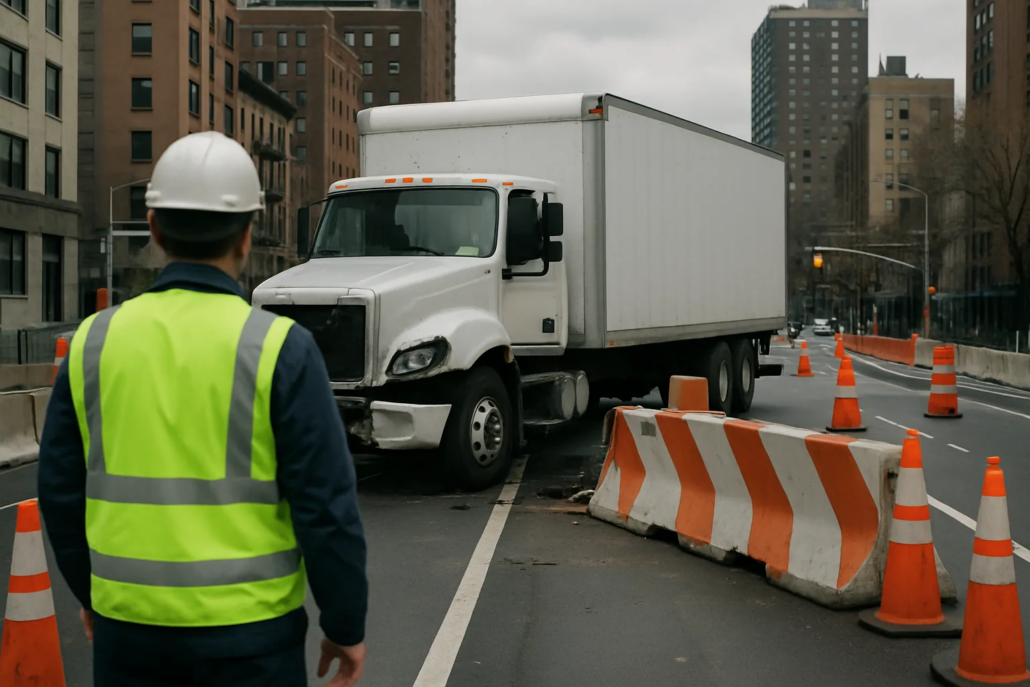
A truck moving through a construction zone has less room to maneuver, while drivers may face shifted lanes, temporary barriers, uneven pavement, changing traffic patterns, or workers directing vehicles. If a collision occurs, an important question is not only what the truck driver did, but also whether the work zone was safely designed, installed, inspected, and maintained. That is the central issue in New York construction-zone truck accident liability.
In New York, NY, determining responsibility may require examining the driver, trucking company, construction contractor, traffic-control personnel, roadway owner, and maintenance entities. Neumann helps readers understand how those roles can overlap without assuming that any particular party is responsible before the evidence is reviewed. This article explains what investigators may examine, which records can matter, why prompt preservation is important, and how claims involving municipal property or construction workers may differ.
Why New York Construction-Zone Truck Accident Liability May Extend Beyond the Driver
A work-zone collision can result from a combination of events. A driver may be traveling too fast for conditions, fail to notice a lane shift, or make an unsafe maneuver. At the same time, a warning sign may be missing, a temporary barrier may be poorly positioned, or a closure may not match the approved traffic-control plan. These possibilities must be evaluated together rather than treated as mutually exclusive.
Truck and driver conduct
An investigation may consider speed, following distance, distraction, fatigue, visibility, braking, turn signals, vehicle inspections, and the driver’s response to cones or flaggers. Dispatch records, onboard data, inspection materials, maintenance records, and driver logs may help establish what happened. Federal trucking rules as evidence in a New York crash claim may be relevant, although a regulatory violation does not automatically prove negligence or determine the final outcome.
Work-zone setup and management
The investigation may also identify who selected the lane closure, placed the signs, supplied the barriers, trained or supervised flaggers, and monitored conditions. Depending on the project, those responsibilities may involve a general contractor, subcontractor, traffic-control company, public agency, or another entity. Understanding when others may share liability for a New York truck crash can help explain why a claim may require more than the driver’s statement.
What Evidence Can Reveal How the Work Zone Was Set Up?
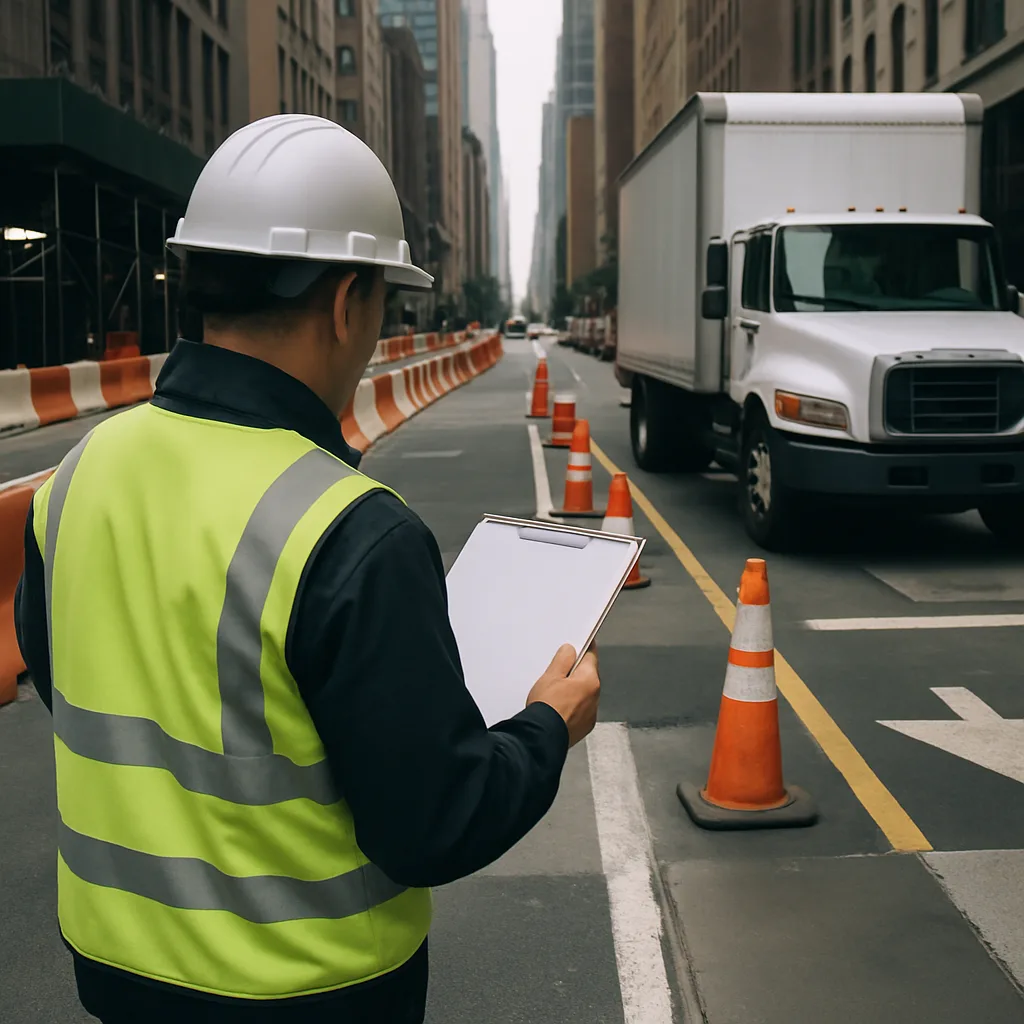
Work zones change quickly. Cones may be moved, pavement may be repaired, signs may be removed, and a temporary traffic pattern may disappear after the project advances. For that reason, photographs and records showing the scene as it existed near the collision can be especially important in a New York, NY truck crash investigation.
Potentially useful evidence may include:
- Photographs or video of lane markings, cones, barrels, signs, barriers, lighting, pavement changes, and sight lines.
- Dash-camera, nearby business, transportation-agency, or vehicle video, if available.
- Names and contact information for drivers, pedestrians, workers, flaggers, and other witnesses.
- Traffic-control plans, lane-closure approvals, daily logs, inspection records, and work orders.
- Contractor agreements identifying who was responsible for installation, inspection, repair, or removal of traffic controls.
- Truck photographs, event-data information, maintenance records, cargo details, and driver communications.
A complete evidence review may compare the physical scene with the project’s plans and daily records. For practical guidance on truck accident evidence to preserve in New York, readers should consider how quickly visual and electronic evidence can become unavailable. Photographs should be taken only when it is safe and lawful to do so.
Who May Be Responsible for Roadway Construction and Maintenance Conditions?
Potential responsibility depends on the facts, contracts, applicable duties, and the connection between a condition and the crash. A contractor may have responsibilities for traffic-control devices or work-zone operations. A municipality or other roadway owner may have duties related to public property, approvals, inspections, or maintenance. A separate company may have installed barriers, managed flaggers, or performed roadway repairs.
This does not mean that every project participant is liable. Investigators generally need to determine who controlled the relevant activity, what condition existed, whether the party knew or should have known about it, and whether the condition contributed to the collision. Records that may help include:
- Approved traffic-control and lane-closure plans.
- Construction schedules, daily reports, and inspection notes.
- Complaints, repair requests, prior incident reports, and maintenance histories.
- Contracts allocating safety, signage, inspection, and repair duties.
- Photographs, measurements, vehicle data, and qualified reconstruction opinions.
In New York, NY, claims involving a municipality or public entity can involve special notice and filing requirements that differ from claims against private parties. The applicable rules may depend on the entity, location, claim type, and facts. Readers should review deadlines for a New York truck injury claim promptly rather than assuming one deadline applies to every potential defendant. A broader discussion of factors that shape a New York construction injury claim may also help explain why project records and responsibility assignments matter.
When the injured person is a construction worker, workers’ compensation may be part of the picture. Depending on the circumstances, the worker may also evaluate a claim involving an outside truck driver, trucking company, contractor, or other third party. The interaction between NYC workers’ compensation and third-party claims can be fact-specific and should not be assumed from the worker’s job title alone.
Frequently Asked Questions
Does a truck driver’s mistake end the investigation?
No. A driver’s conduct may be important, but it may not answer whether a lane closure, sign, barrier, flagger, pavement condition, or lighting problem also contributed to the collision. Investigators may examine multiple causes and the duties assigned to different parties. Responsibility is fact-dependent, and one party’s possible mistake does not automatically eliminate the need to examine the work-zone setup.
Can a construction contractor be involved in a truck accident claim?
Possibly. A contractor or subcontractor may be relevant if its work included traffic control, barrier placement, site supervision, roadway maintenance, or another activity connected to the collision. The existence of a construction contract alone does not establish liability. Investigators generally review the contract, project records, site conditions, and evidence linking the contractor’s conduct to the crash.
What if the work zone was on a New York City roadway?
A collision on a New York City roadway may involve private contractors, transportation agencies, or a municipal entity, depending on who owned, controlled, or maintained the relevant area. Public-entity claims can involve rules that differ from ordinary claims against private parties. Because notice and filing requirements may apply, the identity of each potentially responsible entity should be evaluated promptly.
Can a worker receive workers’ compensation and pursue another claim?
In some circumstances, an injured construction worker may receive workers’ compensation benefits while also evaluating a negligence claim against an outside party, such as a truck driver or trucking company. The available options depend on the employment relationship, the parties involved, and the facts of the crash. A licensed New York attorney can explain how the claims may interact.
How Neumann Can Help
Neumann is dedicated to examining the full setting of a construction-zone truck crash, not just the first account of what happened. The firm may review photographs, video, witness information, vehicle records, work orders, traffic-control plans, contracts, and maintenance materials to identify questions about driver conduct and roadway conditions.
Neumann is committed to fighting for clients’ rights while evaluating the roles of trucking companies, contractors, municipalities, and other entities in a careful, evidence-based manner. If you or a family member was injured in a work-zone collision, contact Neumann for a free consultation or case evaluation. The team is ready to evaluate your situation and discuss potential legal options.
The information in this article is for educational purposes only and does not constitute legal advice. Contact a qualified attorney licensed in New York, NY for advice specific to your situation.


Leave a Reply
Want to join the discussion?Feel free to contribute!