
Can a Defective Truck Part Create a New York Claim?
A serious truck collision can begin with a problem that is not visible at the scene. A brake component may fail, a tire may separate, a steering part may break, or a coupling device may release a trailer. For an injured person searching for a defective truck part accident claim in New York, the central question is often whether the crash resulted from a defective product, inadequate maintenance, driver conduct, or some combination of factors.
These distinctions can affect which parties and insurance policies are relevant. They can also affect what evidence needs to be preserved before a truck is repaired, sold, or returned to service. Neumann helps New York accident victims understand the issues that may arise after a commercial vehicle crash. This article explains potential product liability theories, how they differ from maintenance claims, what evidence may matter, and why an early investigation can be important.
When Can a Defective Truck Part Support a Product Liability Claim in New York?
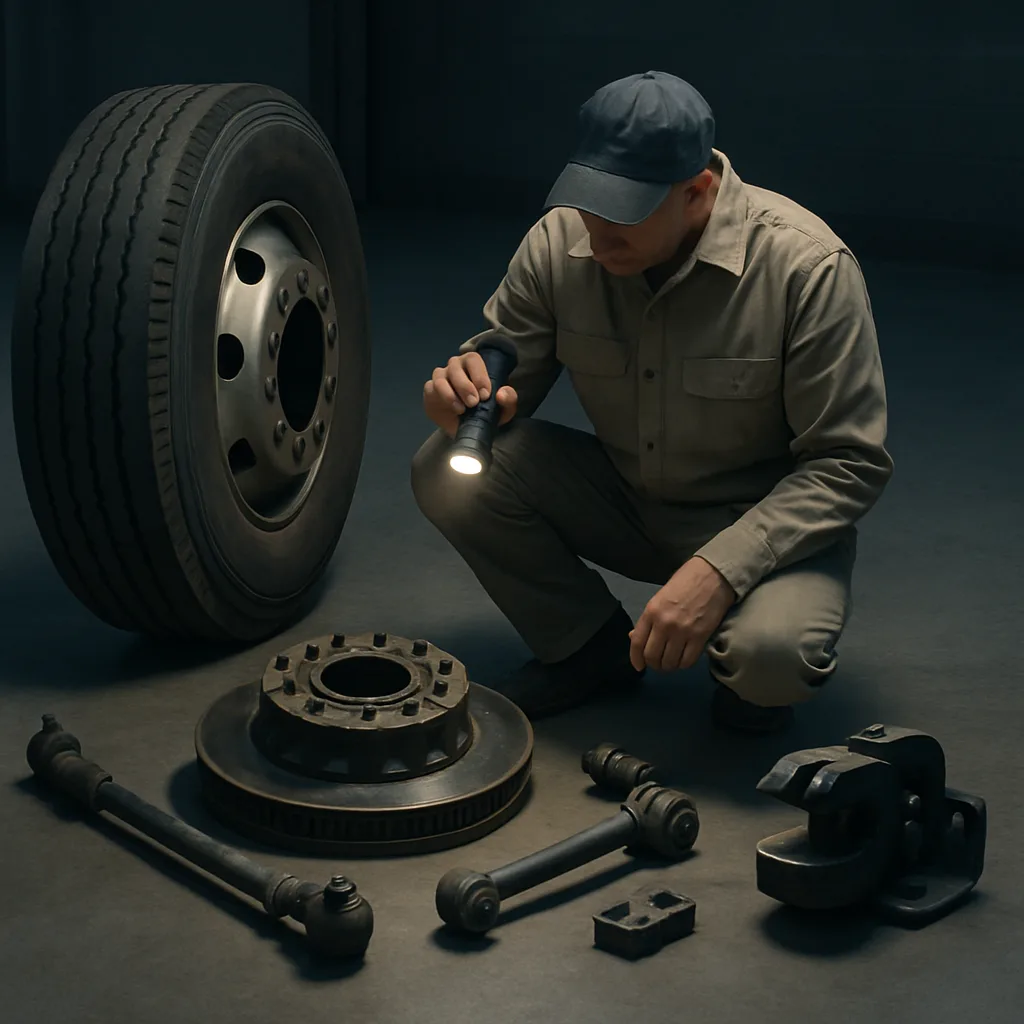
New York product liability claims generally involve a product that was improperly designed, manufactured, or accompanied by inadequate warnings or instructions. In a truck crash, the product could be a brake assembly, tire, wheel, steering component, trailer hitch, lighting system, suspension part, or another component installed in the vehicle.
A failure alone does not automatically prove that a product was defective. Investigators may need to determine whether the part deviated from its intended design, whether the design created an unreasonable safety risk, or whether warnings failed to explain a known or reasonably discoverable danger. The condition of the part, its service history, and the circumstances of the collision may all be relevant.
Product defect versus maintenance failure
A worn brake pad may point toward inadequate inspection or maintenance rather than a manufacturing defect. By contrast, a component that fractured because of a flaw in its materials or manufacturing process may raise different questions. A tire may have been defective when made, improperly selected for the vehicle, damaged during installation, or operated while dangerously underinflated.
Responsibility may extend beyond the truck driver. Depending on the evidence, potentially relevant parties can include a manufacturer, distributor, retailer, repair facility, trucking company, maintenance contractor, or owner. A careful review is needed before drawing conclusions in New York, NY.
What Evidence Matters in a Truck Product Liability Claim in NYC?
Evidence can disappear quickly after a commercial vehicle crash. The truck may be repaired or dismantled, the failed part may be discarded, and electronic data may be overwritten. Preservation is especially important when a mechanical failure is a possible cause of the collision.
Potentially useful evidence may include:
- The vehicle and the failed component, photographed in place before removal when possible.
- Maintenance, inspection, repair, and replacement records.
- Purchase, installation, warranty, and recall-related documents for the part.
- Event data, onboard diagnostic information, and available electronic logging data.
- Police crash reports, photographs, video footage, witness accounts, and roadway evidence.
- The truck’s ownership, leasing, loading, and servicing information.
- Medical records documenting the injuries and treatment, maintained by healthcare providers.
In New York, NY, records may come from several sources, including the New York Police Department for certain city crashes, the New York State Department of Motor Vehicles, and federal motor carrier records when applicable. The availability and use of particular records depend on the facts and the agencies involved.
An attorney or qualified investigator may seek to inspect the vehicle and preserve the component through an evidence-hold request or other appropriate process. That does not mean every request will produce records or establish liability. It does mean that a suspected mechanical cause should not be overlooked while the evidence is still available.
How Are Driver Negligence, Maintenance, and Defective Parts Distinguished?
Truck crashes often involve multiple possible causes. A driver may have failed to respond to a hazard, a trucking company may have delayed required maintenance, and a component may also have contained a defect. New York uses comparative fault principles, so the legal effect of each party’s conduct can depend on the evidence and the claims presented.
Questions an investigation may address
- Was the part designed safely? Experts may compare the component with alternative designs, industry information, and the intended use of the truck.
- Was the part made correctly? Testing may examine fractures, metal fatigue, material composition, assembly, or other physical characteristics.
- Was the part installed and maintained properly? Service records and inspection practices may help distinguish a defect from negligent repair or ordinary wear.
- Did the driver or carrier receive appropriate warnings? Instructions, service intervals, and notices may be relevant depending on the product and circumstances.
- Did the failure cause or contribute to the crash? A defective component must be connected to the collision and resulting injuries through admissible evidence.
A potential truck brake failure lawsuit in NY, for example, may require analysis of the brake system, inspection history, loading conditions, driver actions, and the sequence of events. Similarly, a commercial vehicle tire defect accident may involve the tire’s age, specifications, inflation, mounting, road conditions, and maintenance records.
Because product liability and negligence claims can involve different defendants and defenses, an injured person may benefit from discussing the evidence with a lawyer familiar with New York personal injury and product liability law. Deadlines and procedures vary by claim type and location, including whether a public entity is involved.
Frequently Asked Questions
Can a truck owner be liable instead of the part manufacturer?
Possibly. If negligent inspection, repair, loading, or maintenance contributed to the crash, the truck owner, carrier, maintenance company, or another party may be relevant. A manufacturer or distributor may also be considered if the component itself was defective. Liability is fact-specific, and identifying one potentially responsible party does not automatically exclude others. Records and physical inspection of the truck may help clarify the roles of each party.
What if the failed truck part was replaced after the crash?
Replacement can make investigation more difficult, but it does not necessarily end a claim. Photographs, repair invoices, witness accounts, component packaging, inspection records, and testing information may still provide useful evidence. The timing and reason for the replacement may also matter. Depending on the circumstances, an attorney may evaluate whether additional preservation steps or requests for records are appropriate under New York procedure.
Does a product liability claim require proof of a recall?
No. A recall may be relevant evidence, but a product does not have to be recalled for a claim to be considered. The issue may involve a design, manufacturing, or warning problem affecting one component or a limited group of products. Conversely, the existence of a recall does not by itself prove that the recalled condition caused a particular crash or injury.
Can a truck brake failure lawsuit include claims against more than one business?
It can, depending on the evidence. A claim may involve a component manufacturer, seller, repair business, trucking company, or other entity whose conduct or product allegedly contributed to the collision. Each party may raise different defenses. In New York, the proper defendants, filing deadlines, and available theories depend on the facts, the type of claim, and whether a governmental or other specially protected entity is involved.
How Neumann Can Help
Neumann is dedicated to helping injured people examine the full cause of a truck collision, including possible mechanical and product-related issues. The firm can review available crash information, identify questions about the vehicle or component, and evaluate whether preservation of physical evidence and records may be important. Depending on the circumstances, consultation with qualified technical or medical professionals may also be considered.
If you or a family member was injured in a truck crash in New York, NY, Neumann is ready to evaluate your situation and explain potential legal options. Contact the firm to request a free consultation or case evaluation. Speaking with a licensed attorney can help you understand how New York law may apply to the facts involved.
The information in this article is for educational purposes only and does not constitute legal advice. Contact a qualified attorney licensed in New York, NY for advice specific to your situation.

